No products in the basket.
Ceiling Coving
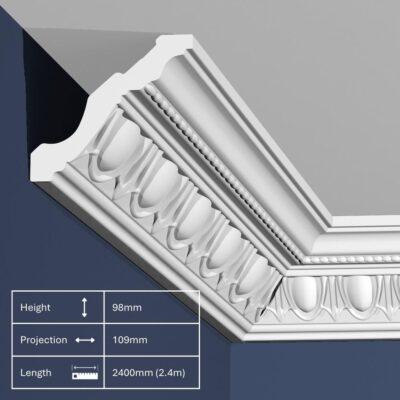
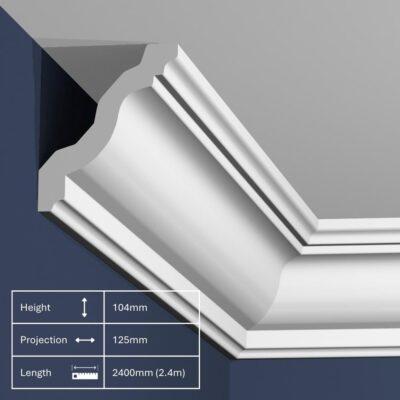
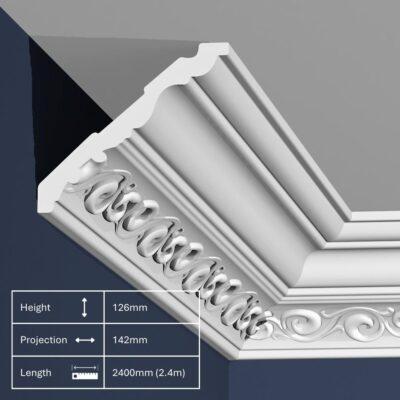
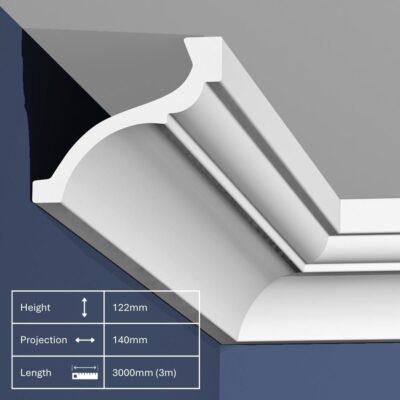
Lightweight polyurethane ceiling coving in eleven profiles, from plain contemporary lines to ornate period mouldings. Supplied factory primed and ready to paint.
Polyurethane holds a sharper edge than polystyrene and weighs a fraction of plaster, so lengths can be handled and fitted single handed. It does not absorb moisture, which makes it suitable for bathrooms and kitchens as well as living rooms and hallways.
Showing all 11 results
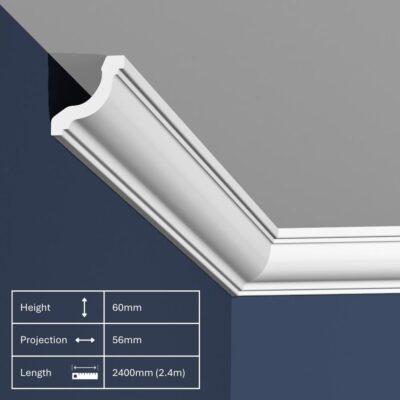
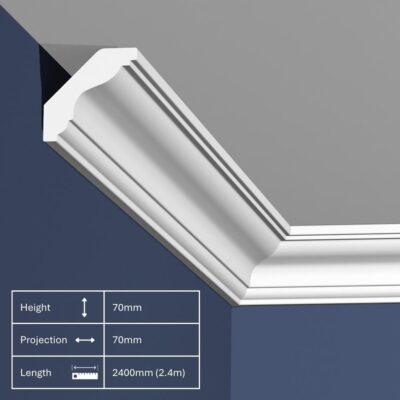
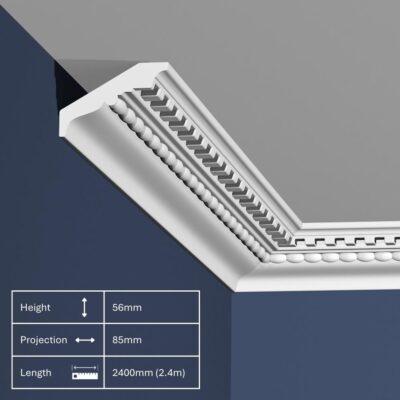
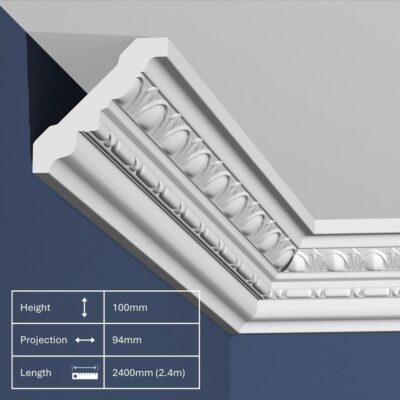
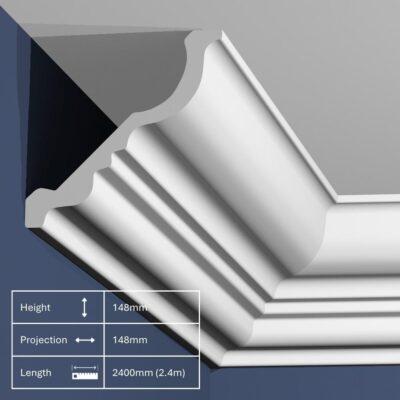
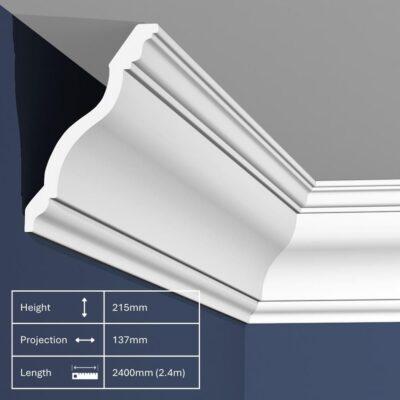
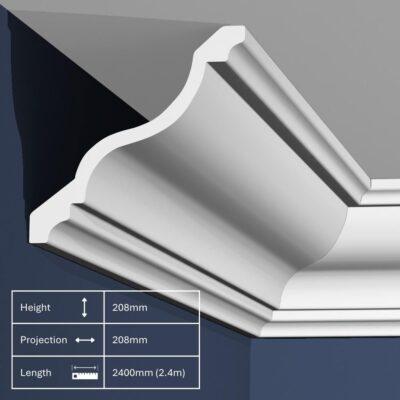
How much coving to order
Measure the perimeter of the room, add every wall together, then add ten per cent for cutting and waste. In a room with bays, alcoves or more than four corners, allow fifteen per cent. Mitred corners produce offcuts that rarely get used elsewhere, and a short length at the end of a run is worth avoiding.
Coving is supplied in fixed lengths, so round up to whole lengths rather than ordering to the exact metre. If a wall is longer than one length, plan where the join falls before you start cutting, ideally away from the main sightline as you enter the room.
Choosing a profile
Deep, ornate profiles suit high ceilings and period rooms. In a standard height room they close the space down and can overwhelm it.
Plain, shallow profiles suit modern interiors and lower ceilings, where the coving is there to finish the junction between wall and ceiling rather than to draw attention.
If you are matching existing coving in an adjoining room, take a photograph and bring a measurement of the height it covers on the wall.
Cutting the corners
Coving is cut at 45 degrees, but the cut is made with the length held in the mitre box at the same angle it will sit on the wall, not laid flat. Internal and external corners are cut in opposite directions, so mark which is which before you cut.
Cut one corner, offer it up and check the fit before cutting the matching piece. Walls are rarely square, and a corner that looks right in the mitre box can leave a gap on the ceiling.